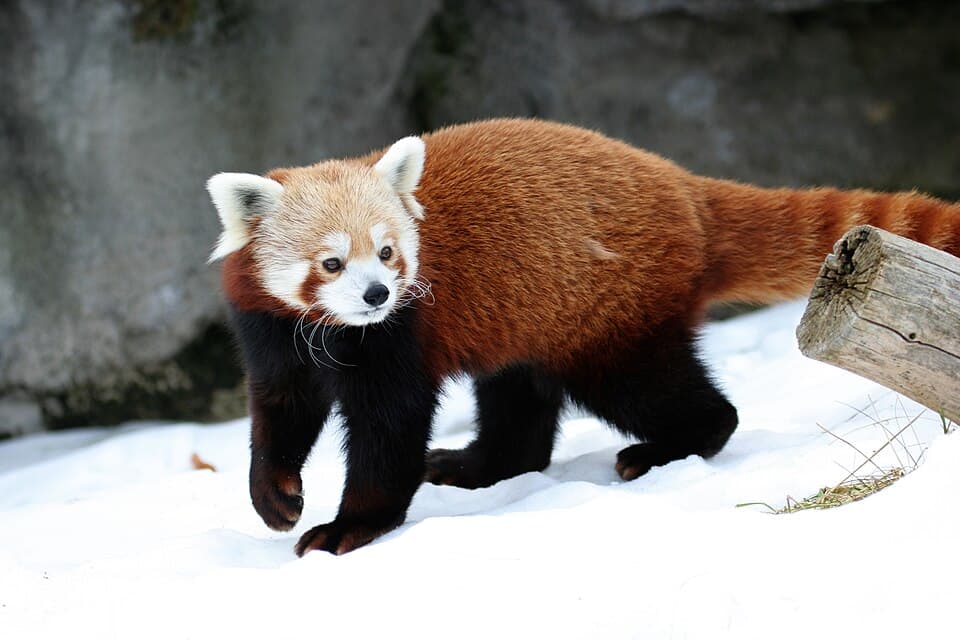
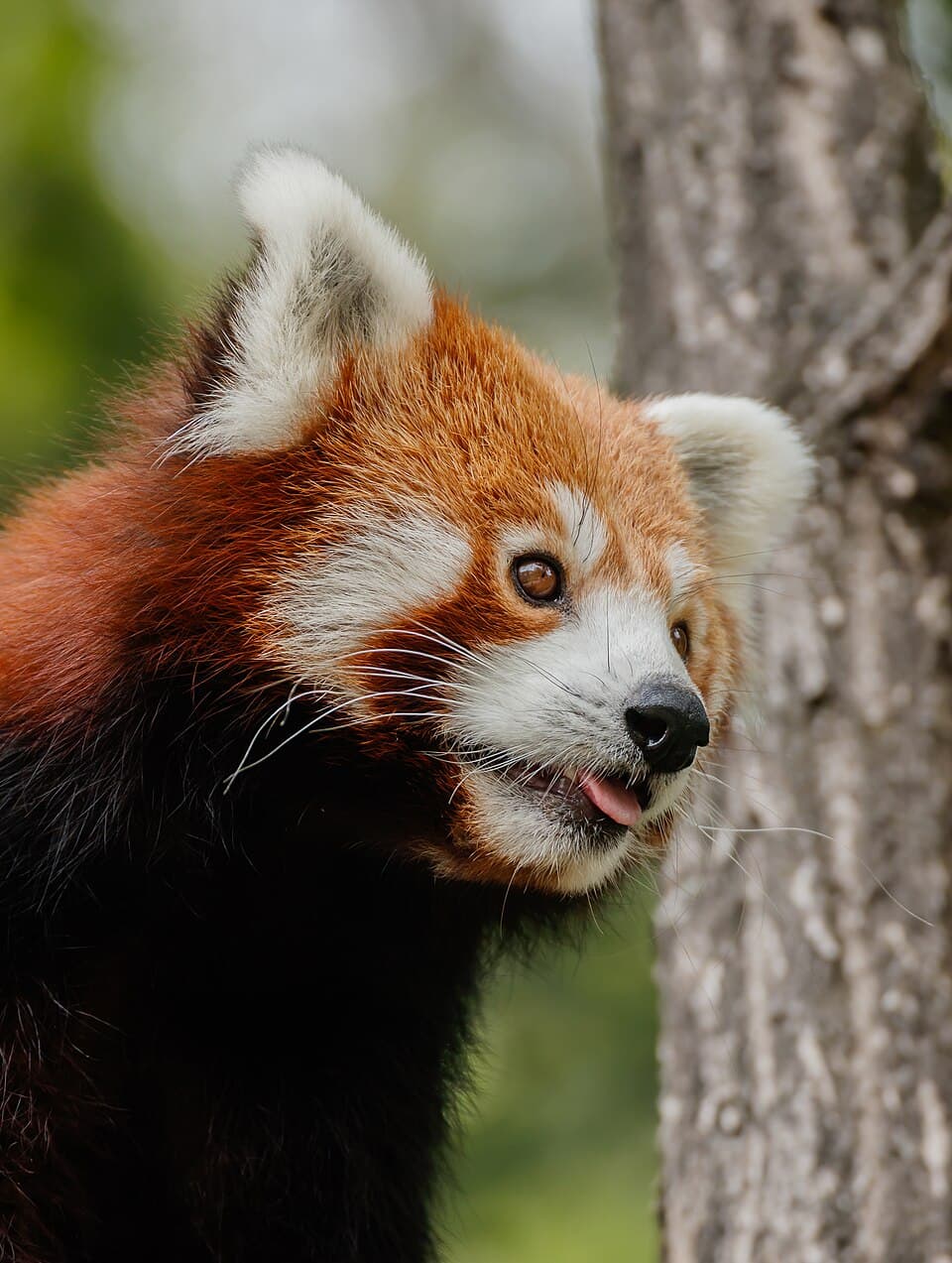
Photo: Dave Pape · Public domain · via Wikimedia Commons
Overview
The red panda is a small, tree-dwelling mammal native to the temperate forests of the eastern Himalayas and southwestern China, spanning Nepal, Bhutan, India, and Myanmar. Despite the shared name and bamboo-heavy diet, it is unrelated to the giant panda — the two evolved their bamboo-eating habits and thumb-like wrist bone independently, a striking example of convergent evolution.
Appearance
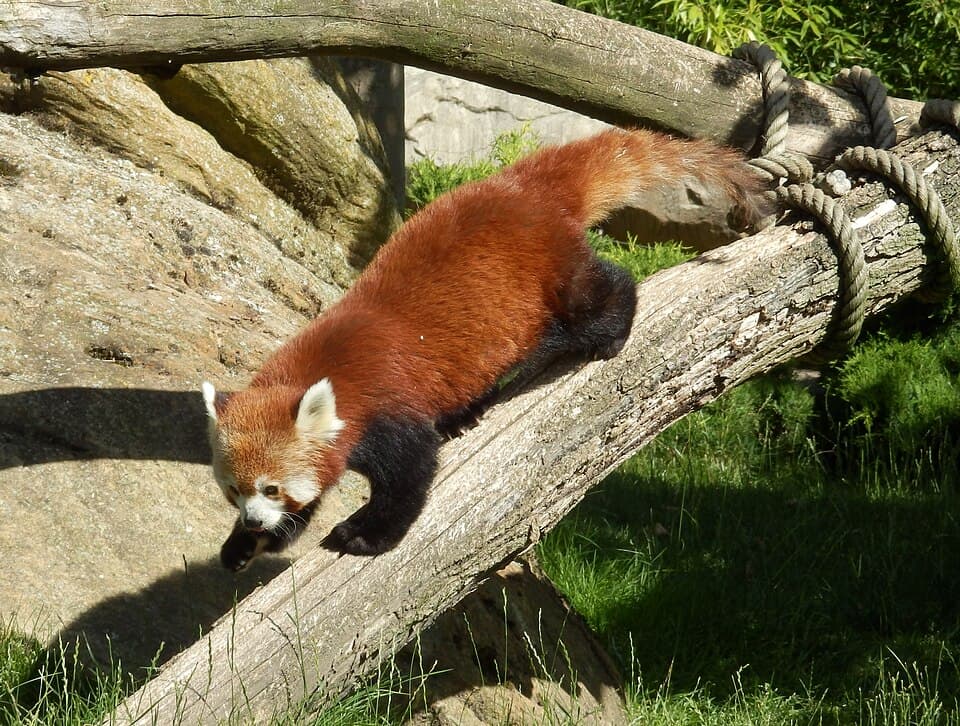
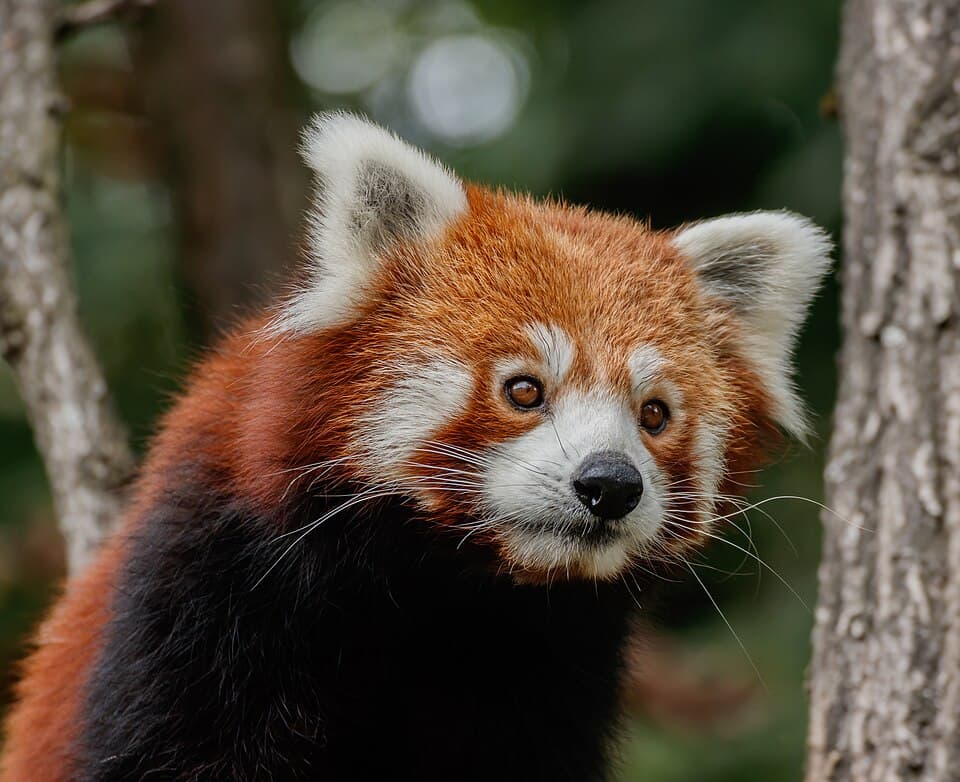
It has a rusty-red coat that helps it blend into the reddish moss and white lichen covering the trees of its habitat, a long bushy ringed tail used for balance and as a wraparound blanket in cold weather, and distinctive white markings on its face and ears. Semi-retractable claws and flexible ankles let it climb head-first down tree trunks, a trick few mammals can manage.
Habitat & Distribution
The red panda is found in forest, mountain habitats.
Diet & Behavior
Diet: Omnivore — Animals with flexible diets that eat both plants and animals, adapting to whatever food is available in their environment.
Red pandas are largely solitary and territorial, marking their range with scent glands, and are most active at dawn and dusk, spending much of the day asleep curled up in trees with their tail wrapped around their body and face. Though classified taxonomically as a carnivore, their diet is over 90% bamboo leaves and shoots, supplemented with fruit, acorns, roots, eggs, and occasionally small insects or rodents. They communicate with a range of sounds, including a soft twittering and a huffing hiss when startled or threatened.
Predators
- Snow leopard
- Marten
Prey
This species does not prey on other animals.
Interesting Facts
- 1
Red pandas use their bushy tail as a blanket in cold weather.
- 2
They have a modified wrist bone that acts like a thumb, just like the giant panda.
- 3
Despite sharing the name, red pandas are not closely related to giant pandas.
- 4
Its scientific name, Ailurus fulgens, roughly translates to "shining cat" or "fire-colored cat."
- 5
It's the only living member of its own family, Ailuridae — scientists once classified it alongside raccoons, and at other times alongside bears.
- 6
Fewer than 10,000 mature red pandas are believed to remain in the wild.
Gallery
Red Panda FAQs
Are red pandas related to giant pandas?
No — despite the shared name and bamboo-based diet, red pandas and giant pandas are not closely related. Both independently evolved to eat bamboo and both have a thumb-like wrist bone, a case of convergent evolution rather than shared ancestry.
What do red pandas eat?
Red pandas eat mostly bamboo leaves and shoots, which make up over 90% of their diet, supplemented with fruit, acorns, roots, eggs, and occasionally small insects or rodents.
Why are red pandas endangered?
Red pandas are threatened primarily by habitat loss from deforestation and agricultural expansion across the Himalayas, along with poaching for the illegal wildlife trade. Fewer than 10,000 mature individuals are believed to remain in the wild.
Where do red pandas live?
Red pandas live in the temperate forests of the eastern Himalayas and southwestern China, including parts of Nepal, Bhutan, India, and Myanmar, typically at higher forest elevations.
What does a red panda eat?
The red panda is an omnivore. Animals with flexible diets that eat both plants and animals, adapting to whatever food is available in their environment.
Where does the red panda live?
The red panda is found in forest, mountain habitats across asia.
Is the red panda endangered?
The red panda has a conservation status of Endangered. Species facing a very high risk of extinction in the wild in the near future.
How long do red pandas live?
A red panda's typical lifespan is 8–12 years in the wild.
How much does a red panda weigh?
An adult red panda typically weighs 3–6.2 kg.