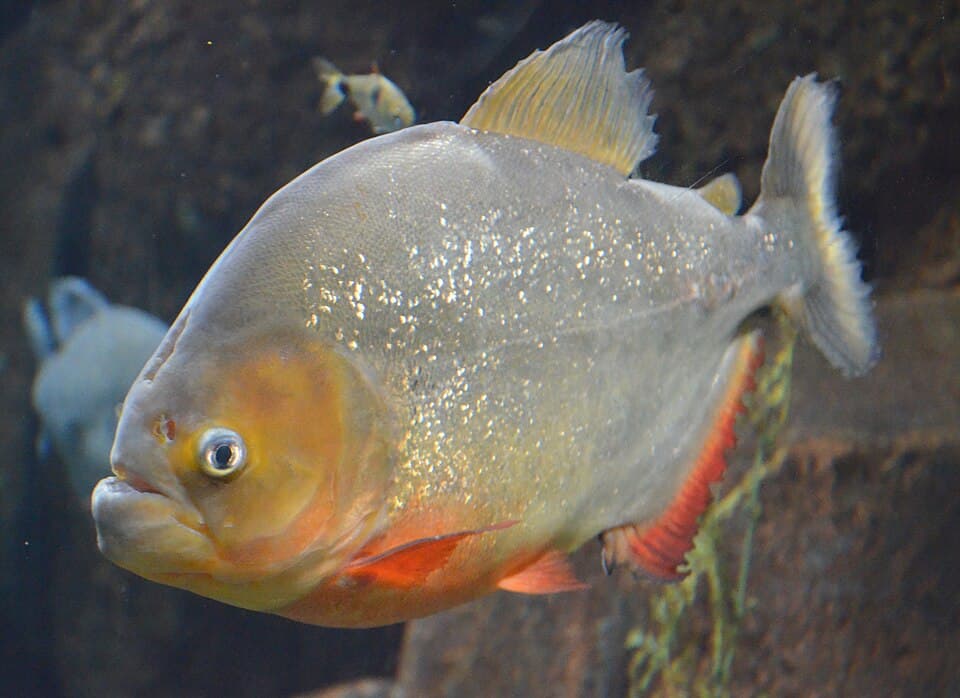
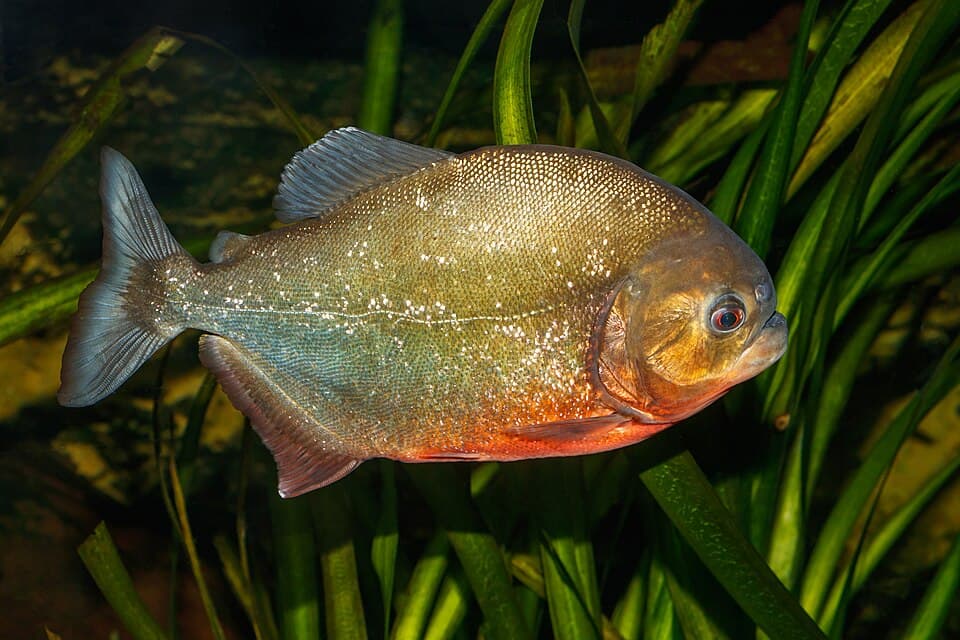
Photo: Joshyja · CC BY-SA 3.0 · via Wikimedia Commons
Overview
The red-bellied piranha is one of the most notorious freshwater fish in the world, native to rivers and floodplains across the Amazon and Orinoco basins in South America. Despite its fearsome reputation, it is primarily a scavenger and opportunistic feeder, and unprovoked attacks on humans are extremely rare.
Appearance
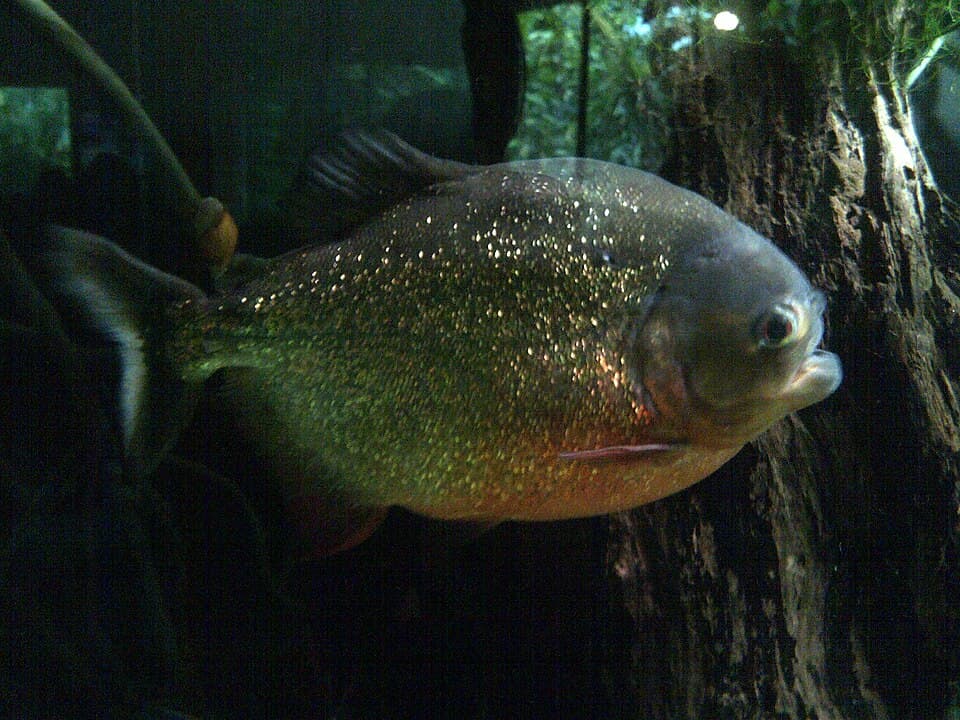
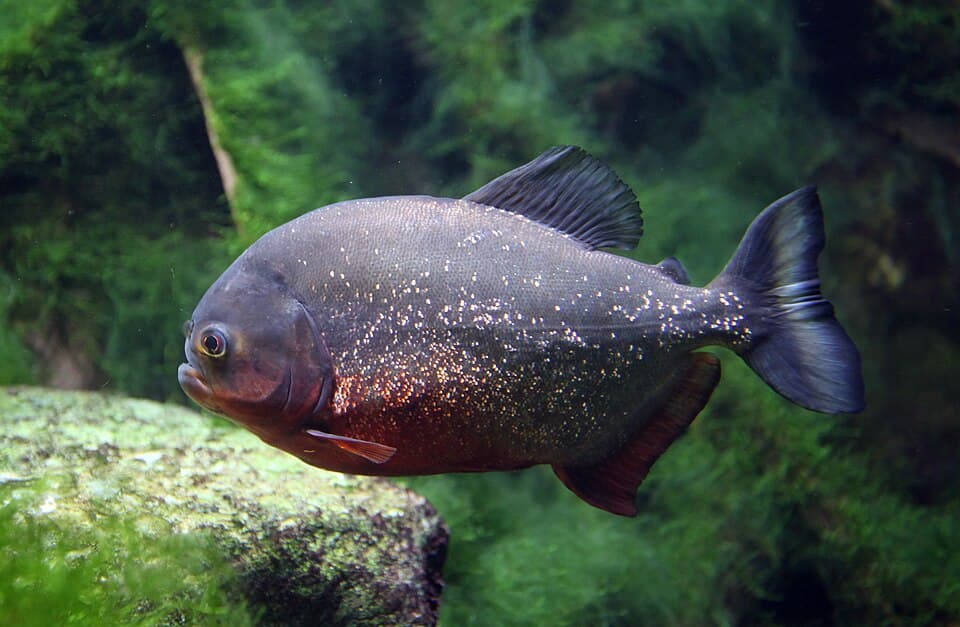
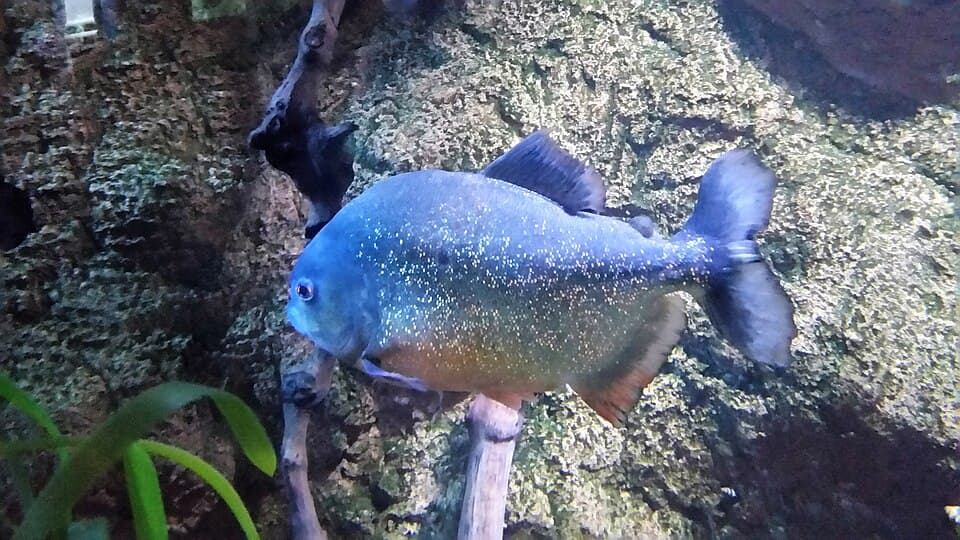
It has a deep, laterally flattened body, a strikingly red or orange belly and throat that gives the species its name, and a powerful lower jaw lined with sharp, interlocking triangular teeth built for shearing flesh. Adults typically reach 15 to 33cm in length.
Habitat & Distribution
The red-bellied piranha is found in rainforest, wetlands habitats.
Diet & Behavior
Diet: Carnivore — Meat-eating animals that hunt, scavenge, or fish for prey, ranging from big cats to snakes and birds of prey.
Red-bellied piranhas usually travel in shoals, a behavior long assumed to be cooperative group hunting but now understood by researchers to be primarily a defense against the fish's own predators, such as larger fish and river dolphins. Feeding frenzies do occur, typically triggered by an already-injured or dying animal in the water, but the species spends most of its time feeding far more calmly on fish, insects, plant matter, and carrion.
Predators
- Larger fish
- River dolphins
- Caimans
- Birds of prey
Prey
- Fish
- Insects
- Plant matter
- Carrion
Interesting Facts
- 1
Despite their reputation, red-bellied piranhas are mostly scavengers, and unprovoked attacks on humans are extremely rare.
- 2
They typically travel in shoals mainly for protection from their own predators, not primarily to hunt cooperatively.
- 3
Their triangular teeth interlock like scissors, letting them shear off chunks of flesh with remarkable efficiency.
- 4
Piranhas can produce audible sounds, including barks and grunts, by vibrating muscles around their swim bladder.
- 5
A group of piranhas can strip a carcass down to the bone in a matter of minutes under the right conditions.
Gallery
Red-Bellied Piranha FAQs
Are piranhas actually dangerous to humans?
Despite their fearsome reputation, unprovoked attacks on humans are extremely rare. Red-bellied piranhas are mostly scavengers and opportunistic feeders, and feeding frenzies are typically triggered by an already-injured or distressed animal in the water.
Why do piranhas swim in groups?
Piranhas were long thought to shoal for cooperative hunting, but research suggests the main reason is actually defense -- grouping together protects them from their own predators, like larger fish and caimans.
What do piranhas eat?
Red-bellied piranhas are opportunistic omnivores that eat fish, insects, plant matter, and carrion, and are not exclusively the flesh-eating hunters of popular reputation.
Where do piranhas live?
Red-bellied piranhas are native to rivers, floodplains, and lakes across the Amazon and Orinoco river basins in South America.
What does a red-bellied piranha eat?
The red-bellied piranha is a carnivore. Its diet includes fish, insects, plant matter, carrion.
Where does the red-bellied piranha live?
The red-bellied piranha is found in rainforest, wetlands habitats across south america.
Is the red-bellied piranha endangered?
The red-bellied piranha has a conservation status of Least Concern. Widespread and abundant species that are not currently at significant risk of extinction.
How long do red-bellied piranhas live?
A red-bellied piranha's typical lifespan is 8–10 years in the wild.
How much does a red-bellied piranha weigh?
An adult red-bellied piranha typically weighs 0.3–1.5 kg.