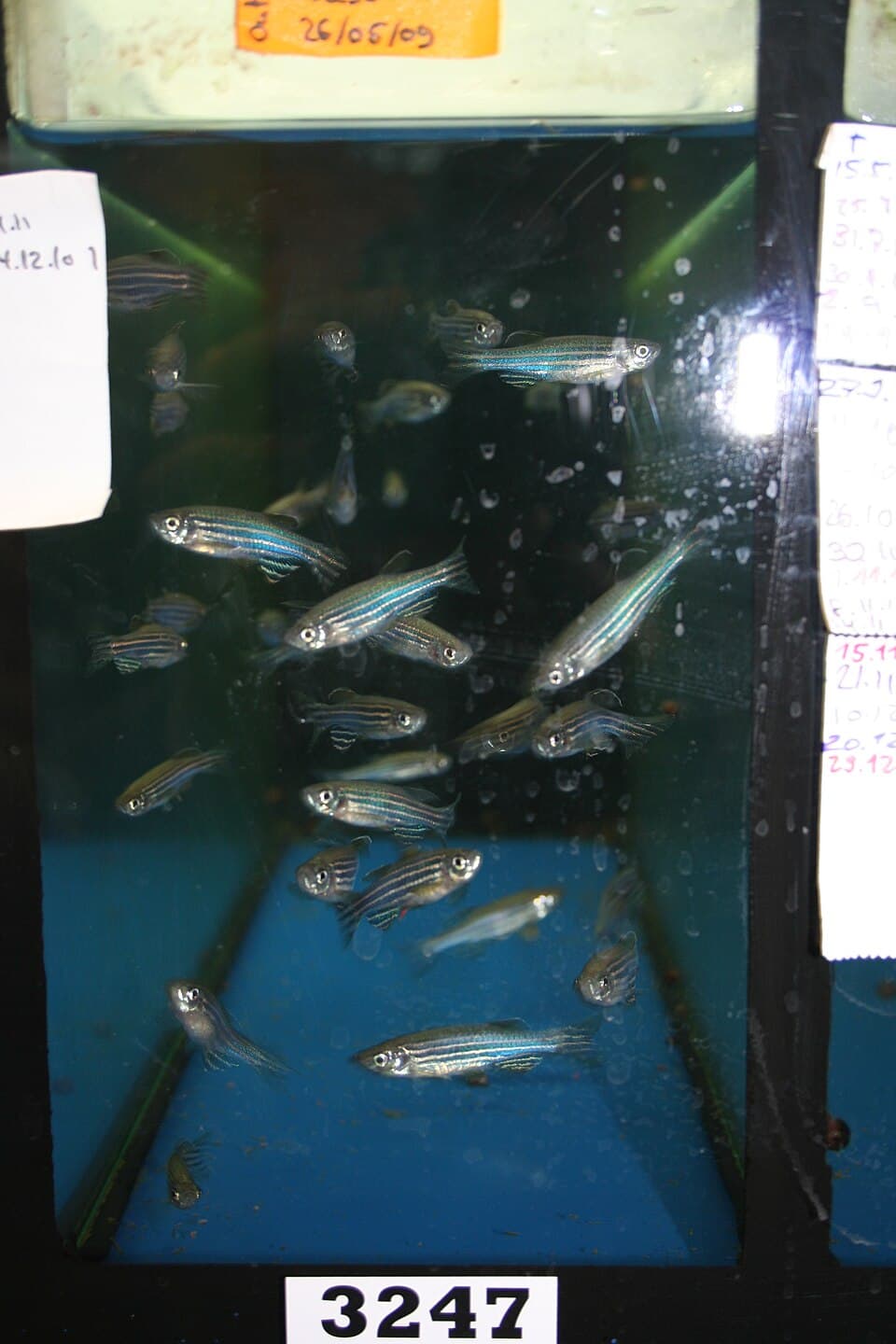
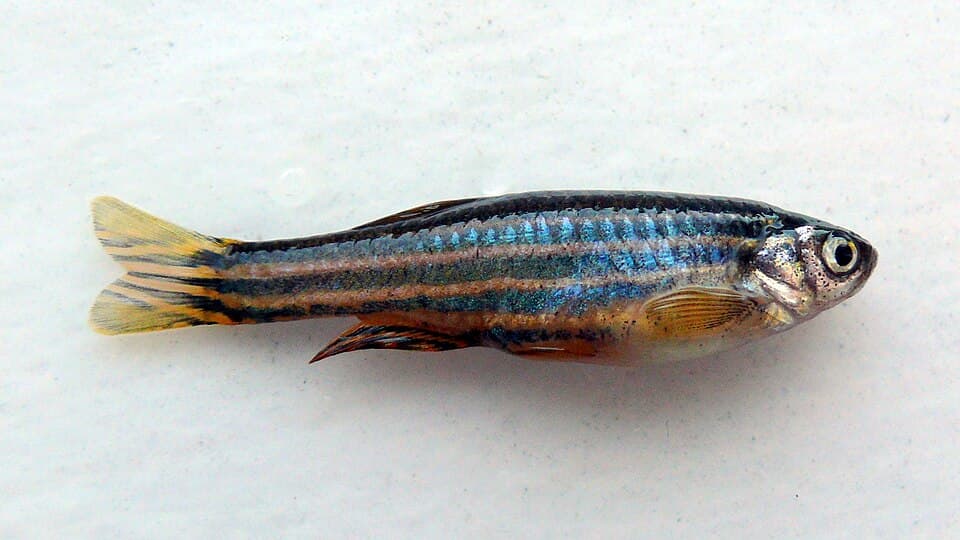
Photo: Pleple2000 · CC BY-SA 4.0 · via Wikimedia Commons
Overview
The zebra danio is a small freshwater fish native to streams and rice paddies across South Asia, named for the five uniform, horizontal blue stripes running along its silvery body. Beyond its popularity as an aquarium fish, it has become one of the most important model organisms in modern biological and medical research.
Appearance
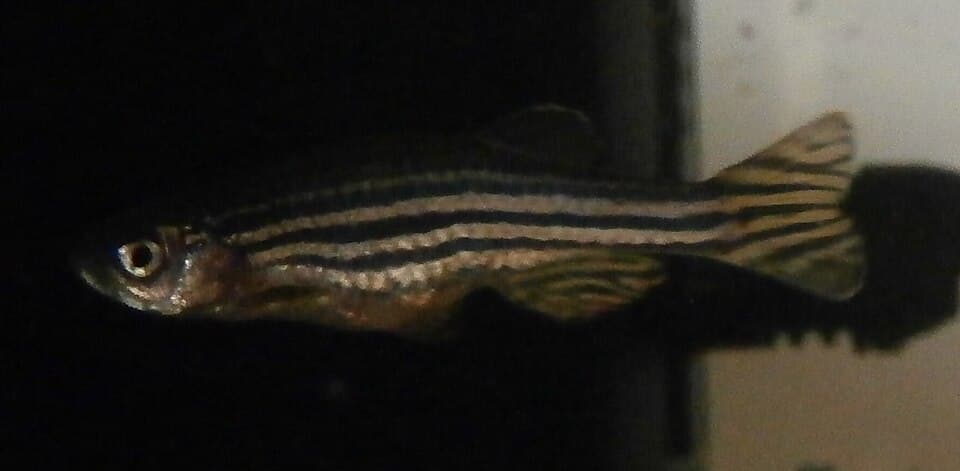
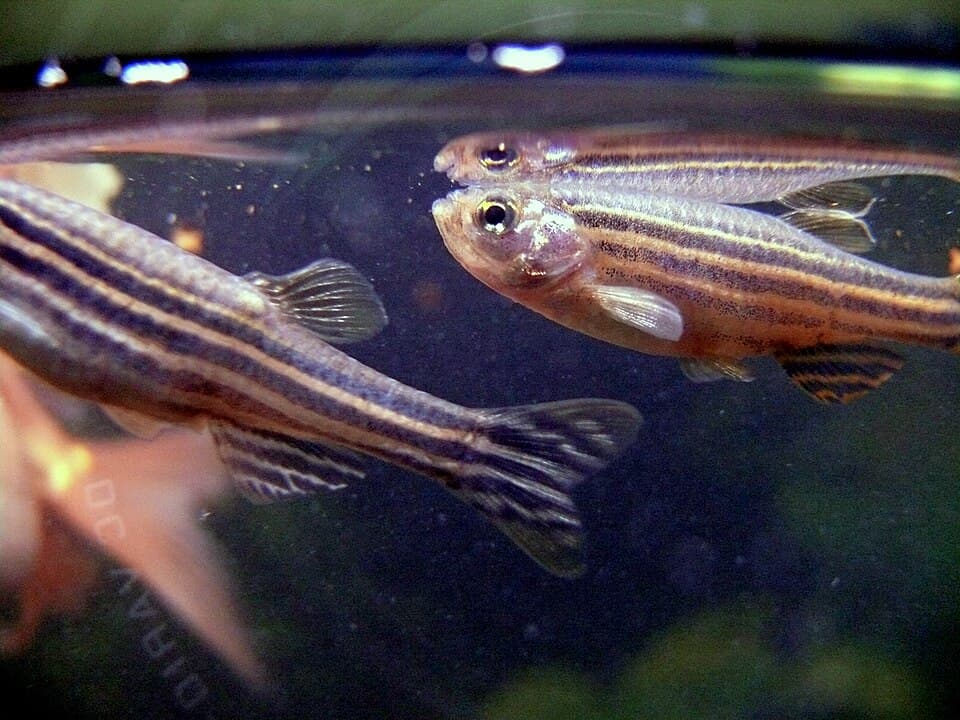
It has a slender, torpedo-shaped body marked with alternating blue and silver horizontal stripes running from head to tail, and semi-transparent fins. Its small size and see-through embryos make it especially easy for scientists to observe internal development under a microscope.
Habitat & Distribution
The zebra danio is found in rainforest, wetlands habitats.
Diet & Behavior
Diet: Omnivore — Animals with flexible diets that eat both plants and animals, adapting to whatever food is available in their environment.
Zebra danios are active, peaceful schooling fish that spend most of their time swimming together in open water, feeding on small insects, worms, and algae. In the wild, they are often found in shallow, slow-moving or seasonally flooded water, including rice paddies, where they can tolerate a wide range of temperatures and water conditions.
Predators
- Larger fish
- Birds
Prey
- Small insects
- Worms
- Algae
- Zooplankton
Interesting Facts
- 1
Zebra danios are one of the most widely used model organisms in scientific research, thanks partly to their transparent embryos.
- 2
They can regenerate damaged fins, heart tissue, and even parts of the spinal cord, making them valuable for studying regeneration.
- 3
Their five signature stripes give the species its zebra-inspired name.
- 4
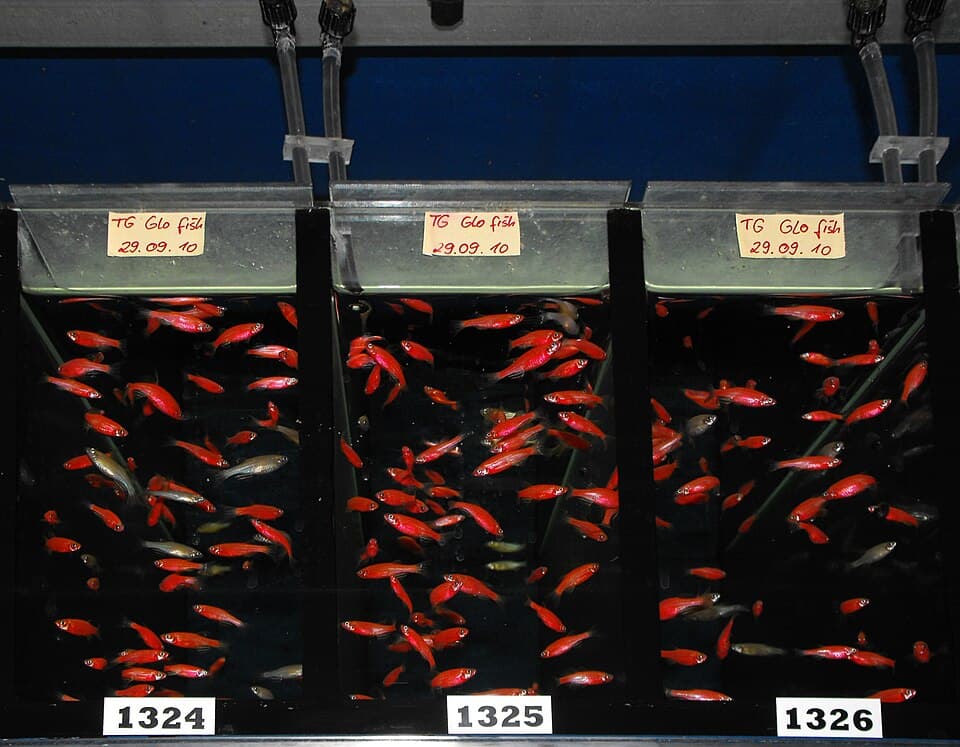
Zebra danios were among the first fish to be genetically modified to glow under UV light, becoming the basis for popular GloFish aquarium varieties.
- 5
They are hardy fish able to tolerate a wide range of water temperatures for short periods.
Gallery
Zebra Danio FAQs
Why are zebra danios used in scientific research?
Zebra danios develop outside the mother in transparent eggs, letting scientists directly observe organ and tissue development under a microscope, and they share a surprising number of genes with humans, making them valuable for studying development, disease, and regeneration.
Can zebra danios regenerate body parts?
Yes -- they're able to regenerate damaged fins, heart tissue, and even portions of their spinal cord, a trait that makes them especially valuable for regenerative medicine research.
Are zebra danios related to GloFish?
Yes -- zebra danios were among the first fish species genetically modified to fluoresce, forming the basis for the popular GloFish aquarium varieties sold today.
What do zebra danios eat?
In the wild, zebra danios eat small insects, worms, algae, and zooplankton, foraging actively in shallow, slow-moving water.
What does a zebra danio eat?
The zebra danio is an omnivore. Animals with flexible diets that eat both plants and animals, adapting to whatever food is available in their environment.
Where does the zebra danio live?
The zebra danio is found in rainforest, wetlands habitats across asia.
Is the zebra danio endangered?
The zebra danio has a conservation status of Least Concern. Widespread and abundant species that are not currently at significant risk of extinction.
How long do zebra danios live?
A zebra danio's typical lifespan is 2–3.5 years in the wild.
How much does a zebra danio weigh?
An adult zebra danio typically weighs 0.0005–0.001 kg.