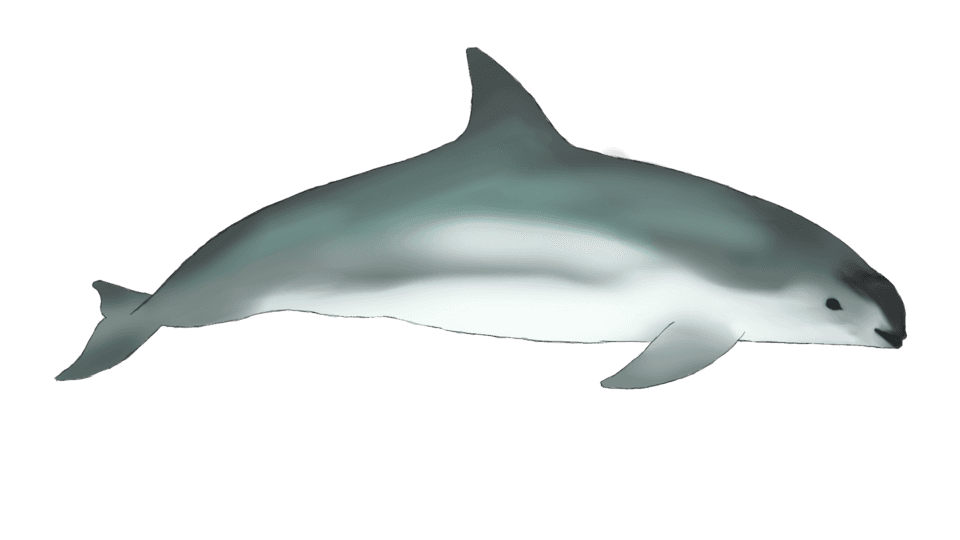
Photo: 좀비 브렌다 · CC BY-SA 4.0 · via Wikimedia Commons
Overview
The vaquita is the world's smallest and most endangered cetacean, found only in a small area of the northern Gulf of California in Mexico. Fewer than a handful of confirmed individuals are believed to remain in the wild, making it one of the most critically threatened marine mammals on Earth.
Appearance
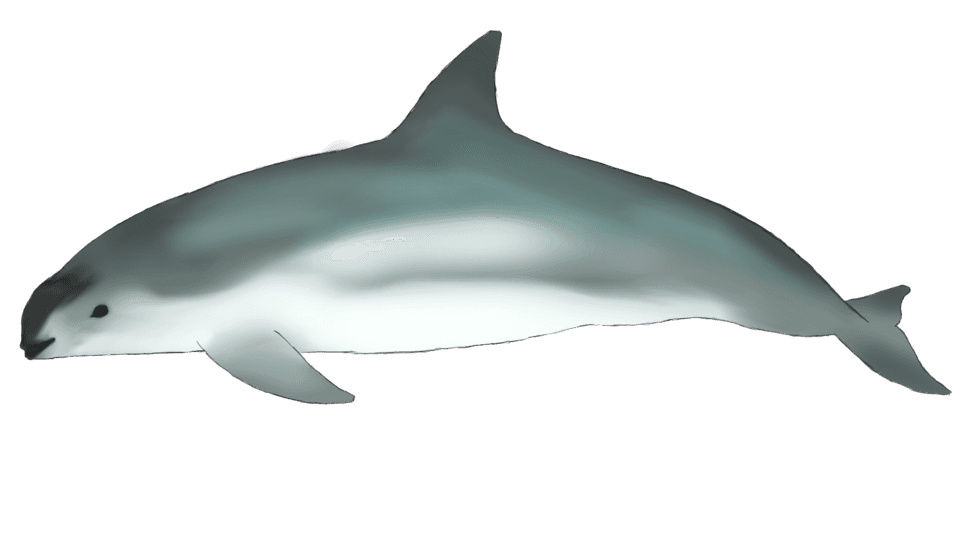
It has a small, compact body with dark rings around its eyes and dark patches on its lips that give it a distinctive, almost painted facial appearance. Unlike dolphins, it has a small, rounded head with no pronounced beak, and a proportionally large, triangular dorsal fin relative to its body size.
Habitat & Distribution
The vaquita is found in ocean habitats.
Diet & Behavior
Diet: Carnivore — Meat-eating animals that hunt, scavenge, or fish for prey, ranging from big cats to snakes and birds of prey.
Vaquitas are shy, elusive animals that avoid boats and rarely breach the surface dramatically, making them extremely difficult to study or even observe in the wild. They are typically found alone or in small groups of two to three, feeding on small fish and squid in the shallow, murky waters of their limited range.
Predators
- Sharks
- Orcas
Prey
- Small fish
- Squid
Interesting Facts
- 1
The vaquita is the smallest of all cetaceans, and also the most endangered.
- 2
It is found in only one small area of the world: the northern Gulf of California, Mexico.
- 3
The main threat to its survival is accidental entanglement in illegal gillnets set for another endangered species, the totoaba fish.
- 4
Distinctive dark rings around its eyes and patches on its lips give the vaquita an almost painted facial appearance.
- 5
Population surveys suggest as few as 10 individuals may remain in the wild, making every sighting scientifically significant.
Gallery
Vaquita FAQs
Why is the vaquita so endangered?
The vaquita's biggest threat is accidental entanglement and drowning in illegal gillnets set to catch totoaba, another endangered fish species prized for its swim bladder. Because vaquitas share the same small habitat as totoaba, they're frequently caught as unintended bycatch.
How many vaquitas are left?
Population surveys have suggested as few as 10 or fewer individuals may remain, making the vaquita the most critically endangered marine mammal in the world.
Where do vaquitas live?
Vaquitas are found only in a small area of the northern Gulf of California in Mexico, making them one of the most geographically restricted marine mammals on Earth.
How big is a vaquita?
The vaquita is the smallest cetacean species, typically measuring 120 to 150cm in length and weighing 30 to 55kg as an adult.
What does a vaquita eat?
The vaquita is a carnivore. Its diet includes small fish, squid.
Where does the vaquita live?
The vaquita is found in ocean habitats across north america.
Is the vaquita endangered?
The vaquita has a conservation status of Critically Endangered. Species facing an extremely high risk of extinction, often down to only a handful of populations left in the wild.
How long do vaquitas live?
A vaquita's typical lifespan is 15–21 years in the wild.
How much does a vaquita weigh?
An adult vaquita typically weighs 30–55 kg.