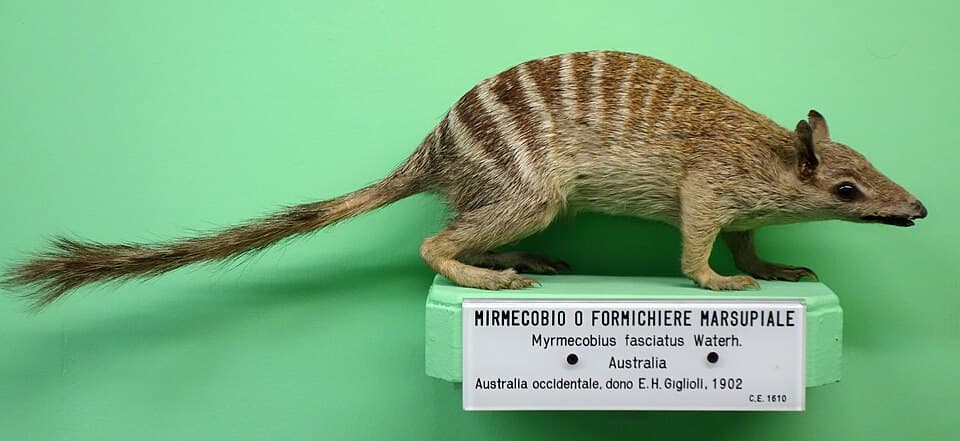
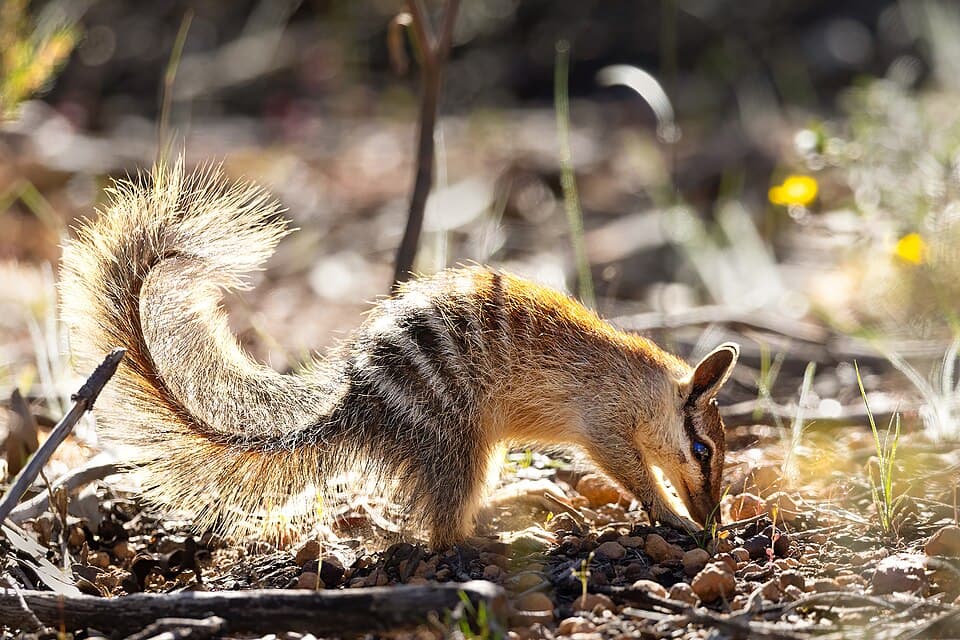
Photo: Daderot · CC0 · via Wikimedia Commons
Overview
The numbat is a small, striped marsupial from Western Australia and one of the very few marsupials active exclusively during the day. Unlike most marsupials, it feeds almost entirely on termites, using an extremely long, sticky tongue to extract thousands of them from tunnels and rotting wood each day.
Appearance
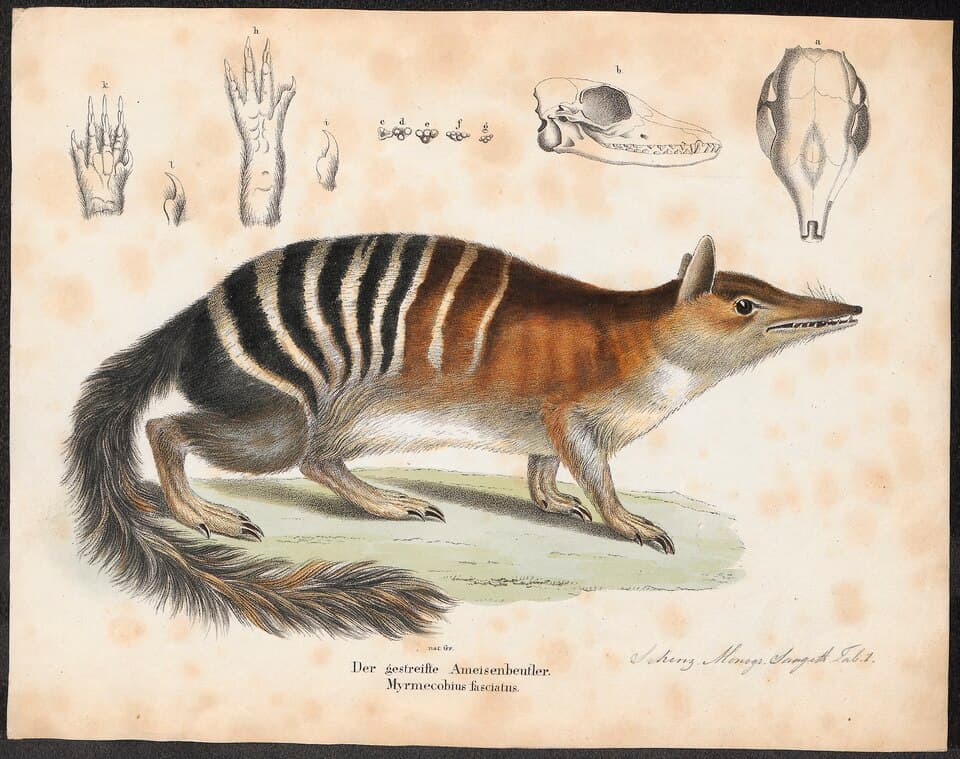
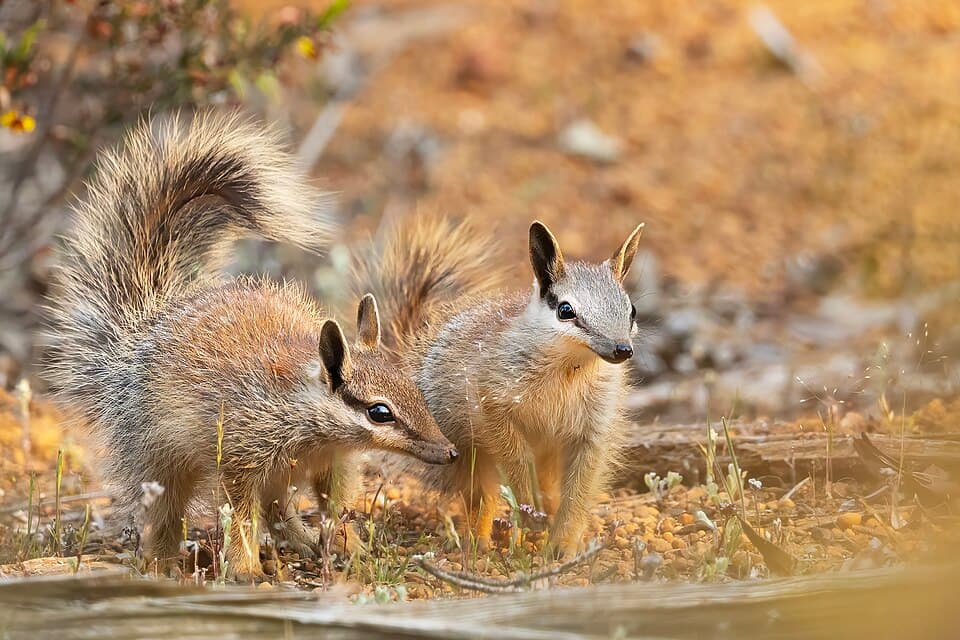
It has reddish-brown fur marked with several white stripes across its rump, a long bushy tail, and a slender, pointed snout suited to probing termite galleries. Unlike most marsupials, it lacks a fully developed pouch, with young instead clinging to exposed teats covered only by long surrounding fur.
Habitat & Distribution
The numbat is found in forest, grassland habitats.
Diet & Behavior
Diet: Carnivore — Meat-eating animals that hunt, scavenge, or fish for prey, ranging from big cats to snakes and birds of prey.
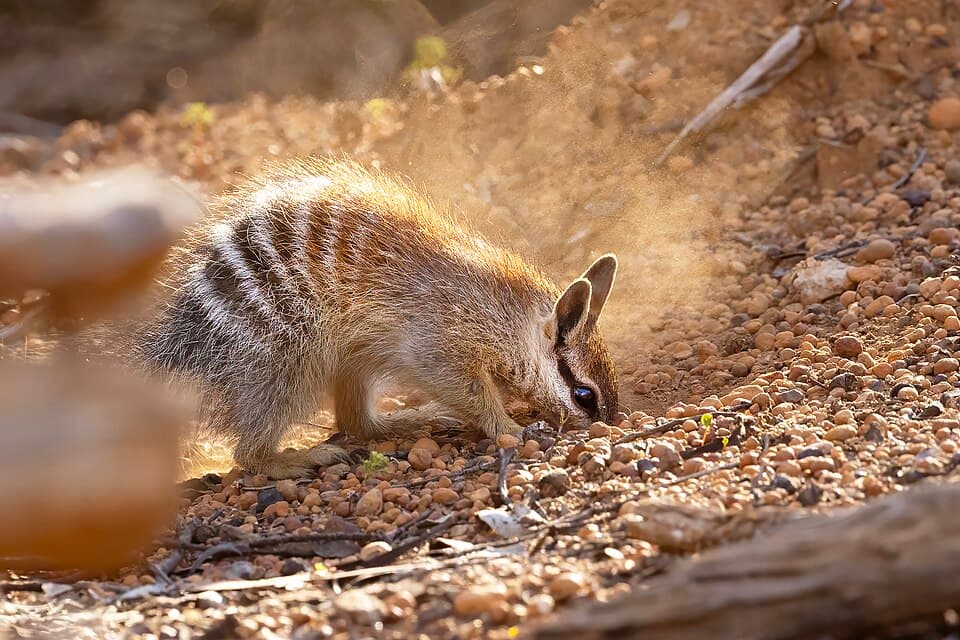
Numbats spend their days foraging alone across the forest floor, using their acute sense of smell to locate termite galleries hidden underground or inside fallen logs, then breaking into them with strong front claws before using a long, sticky tongue to lap up termites. Unlike most marsupials, which are nocturnal, numbats are active only during daylight hours, since their termite prey is most active and accessible in the warmth of the day.
Predators
- Foxes
- Feral cats
- Birds of prey
Prey
- Termites
Interesting Facts
- 1
A numbat can eat up to 20,000 termites in a single day.
- 2
It's one of the few marsupials active exclusively during the day rather than at night.
- 3
Unlike most marsupials, adult numbats have no proper pouch to carry their young.
- 4
Introduced foxes and cats have made the numbat one of Australia's most endangered mammals, with wild populations now confined to small protected areas.
- 5
Its long, sticky tongue can extend far beyond its snout to reach termites deep inside narrow tunnels.
Gallery
Numbat FAQs
What do numbats eat?
Numbats are specialist insectivores that feed almost exclusively on termites, eating up to 20,000 in a single day using a long, sticky tongue to extract them from tunnels and rotting wood.
Are numbats nocturnal?
No -- unusually for a marsupial, numbats are active only during the day, since that's when their termite prey is most active near the surface.
Why are numbats endangered?
Introduced predators like foxes and feral cats, along with habitat loss, have caused a severe decline in numbat populations, which are now largely confined to a few protected reserves in Western Australia.
Do numbats have pouches like other marsupials?
Adult numbats lack a fully developed pouch. Instead, their young cling to exposed teats that are protected mainly by the surrounding long fur on the mother's belly.
What does a numbat eat?
The numbat is a carnivore. Its diet includes termites.
Where does the numbat live?
The numbat is found in forest, grassland habitats across australia.
Is the numbat endangered?
The numbat has a conservation status of Endangered. Species facing a very high risk of extinction in the wild in the near future.
How long do numbats live?
A numbat's typical lifespan is 5–6 years in the wild.
How much does a numbat weigh?
An adult numbat typically weighs 0.3–0.7 kg.