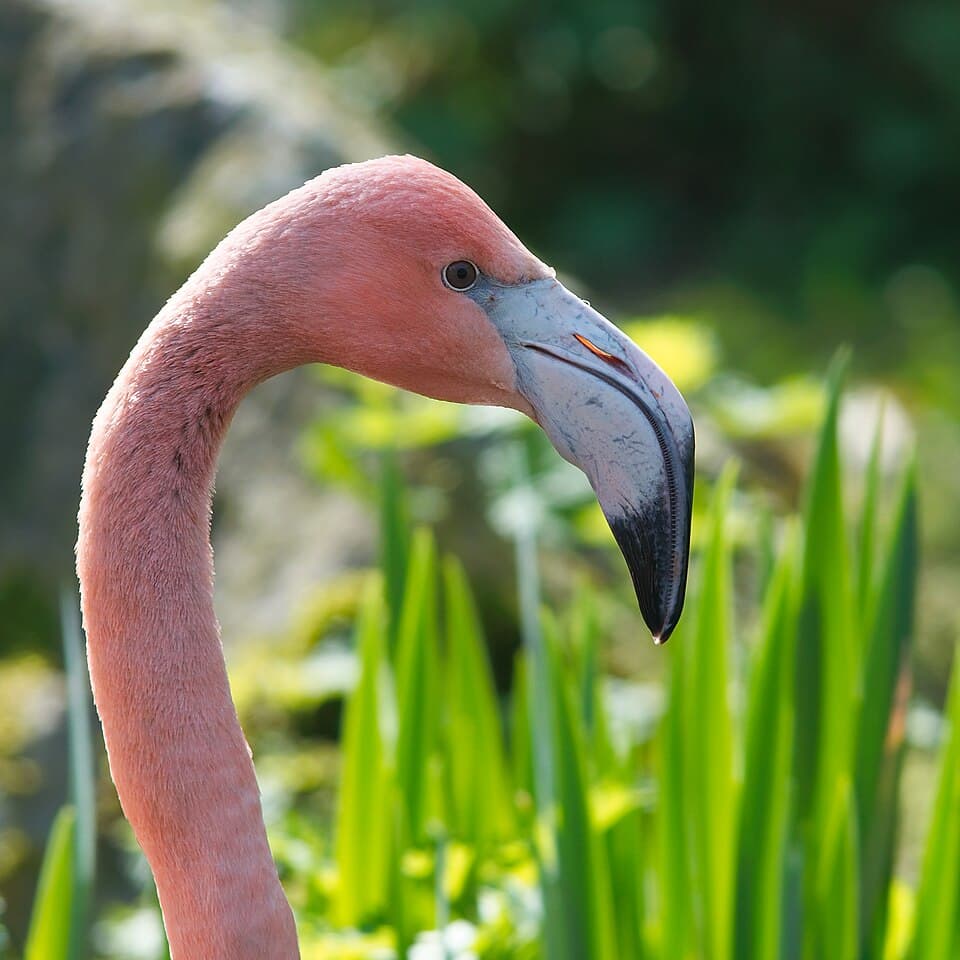
Photo: Luc Viatour · CC BY-SA 3.0 · via Wikimedia Commons
Overview
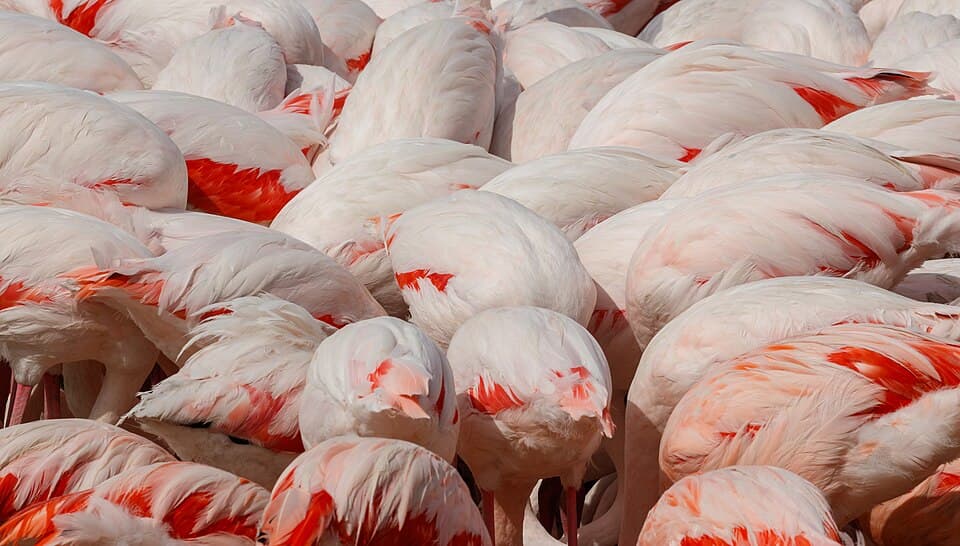
The greater flamingo is the largest and most widespread flamingo species, found wading in large flocks through shallow saline lakes and lagoons.
Appearance
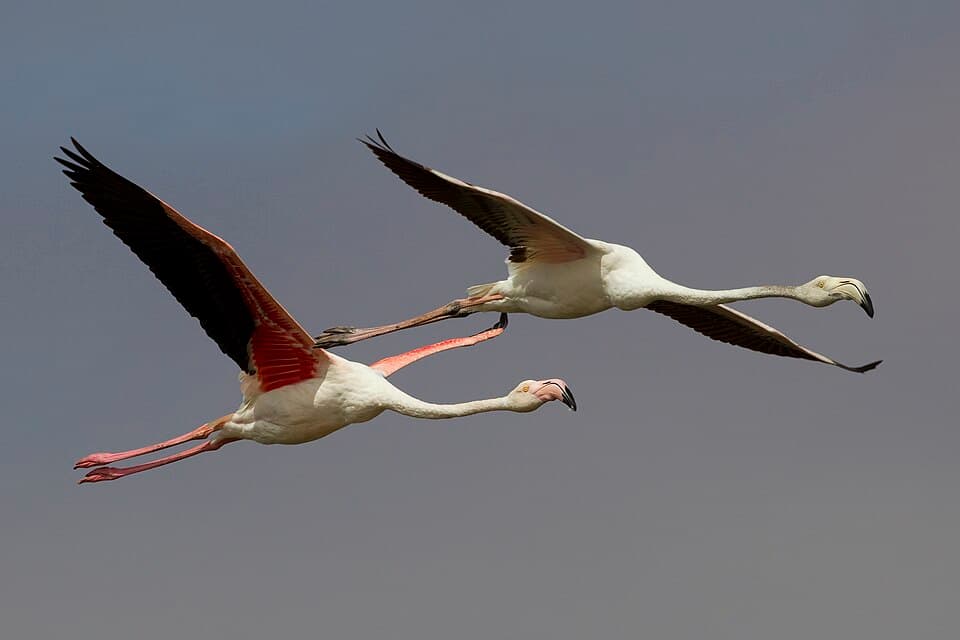
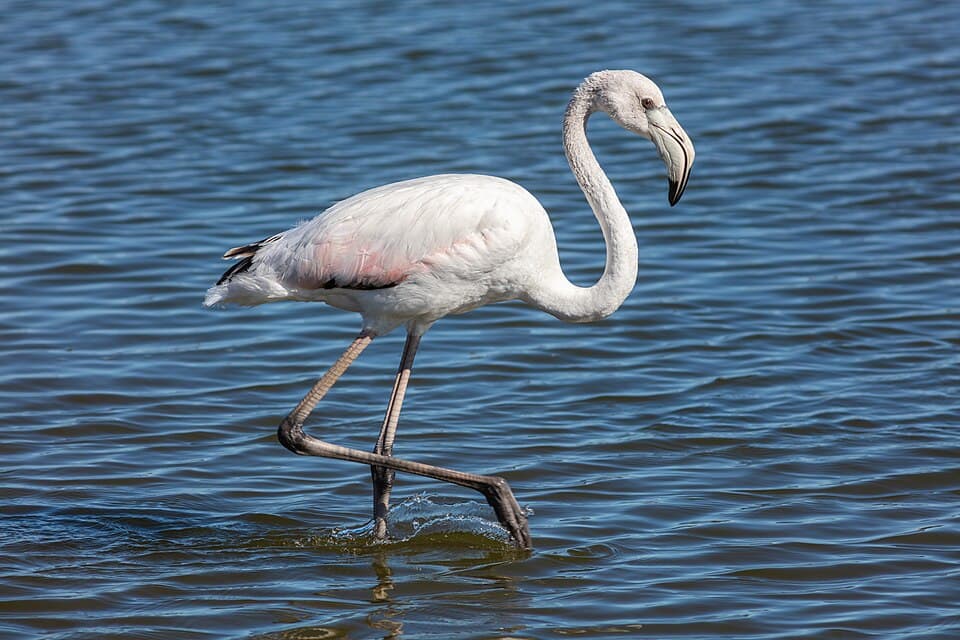
It has long pink legs, an S-curved neck, pale pink plumage, and a downward-bending bill used to filter-feed upside down.
Habitat & Distribution
The greater flamingo is found in wetlands habitats.
Diet & Behavior
Diet: Omnivore — Animals with flexible diets that eat both plants and animals, adapting to whatever food is available in their environment.
Flamingos feed by sweeping their heads through water and mud, filtering small organisms with comb-like structures in their bills, and often stand on one leg to conserve body heat.
Predators
- Fox
- Large birds of prey (eggs/chicks)
Prey
- Algae
- Small crustaceans
- Insects
Interesting Facts
- 1
A flamingo's pink color comes from pigments in the algae and crustaceans it eats.
- 2
They can filter-feed with their heads completely upside down.
- 3
Flamingo chicks are born gray and only turn pink after several years.
Gallery

Greater Flamingo FAQs
What does a greater flamingo eat?
The greater flamingo is an omnivore. Animals with flexible diets that eat both plants and animals, adapting to whatever food is available in their environment.
Where does the greater flamingo live?
The greater flamingo is found in wetlands habitats across africa, asia, and europe.
Is the greater flamingo endangered?
The greater flamingo has a conservation status of Least Concern. Widespread and abundant species that are not currently at significant risk of extinction.
How long do greater flamingos live?
A greater flamingo's typical lifespan is 30–40 years in the wild.
How much does a greater flamingo weigh?
An adult greater flamingo typically weighs 2–4 kg.